




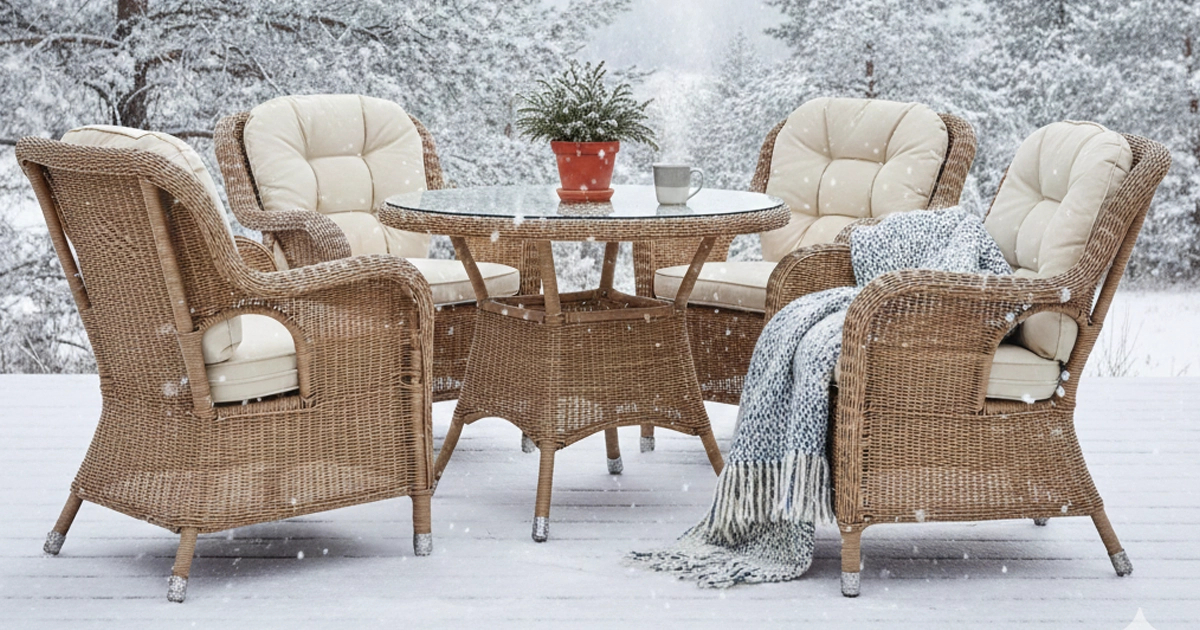
Wicker furniture is a popular choice for outdoor spaces thanks to its stylish woven texture and relaxed, natural look, but when winter approaches, many homeowners wonder whether it can stay outside without getting damaged. Cold temperatures, snow, ice, and moisture can be tough on outdoor furniture, so understanding how different types of wicker hold up in harsh weather is essential.
In this blog, we’ll break down whether you can leave wicker furniture outside in the winter, how synthetic and natural wicker react to the elements, and the best ways to protect your patio pieces for long-lasting durability. While protecting your wicker furniture during winter is important, you can also refresh and furnish your home affordably with quality pieces from Affordable Furniture 610, offering stylish and budget-friendly home furnishings for every space.
What Is Wicker Furniture?
Wicker furniture is furniture made by weaving thin, flexible materials together to create chairs, tables, sofas, or other pieces. The term “wicker” refers to the weaving technique, not the material itself.
What Is Wicker Furniture Made From?
- Natural fibers – rattan, bamboo, willow, or reed
- Synthetic fibers – resin, plastic, or polyethylene (also called all-weather wicker)
Key characteristics
- Lightweight yet sturdy
- Can be styled for indoor or outdoor use
- Natural wicker has a rustic, classic look
- Synthetic wicker is more durable and weather-resistant
Can Wicker Furniture Be Left Outside in the Winter?
No, natural wicker furniture should not be left outside in the winter, while synthetic wicker can usually withstand winter conditions with proper care.
Wicker furniture is a favorite for outdoor spaces because of its stylish woven design and lightweight feel, but winter weather can be harsh on it. Whether you can leave wicker furniture outside depends on the type of material used:
- Natural Wicker: Made from rattan, bamboo, or other plant fibers, natural wicker is not suitable for winter. It absorbs moisture, which can cause warping or cracking, and freezing temperatures make the fibers brittle. Prolonged exposure to snow or rain can also lead to mold or mildew. If you have natural wicker furniture, it’s best to store it indoors or in a dry, covered area, or at least use a waterproof cover.
- Synthetic Wicker: Made from resin or polyethylene, synthetic wicker is much more durable in winter conditions. It resists water, freezing temperatures, and UV damage, making it suitable for outdoor use. However, for the longest life, it’s still recommended to cover it during heavy snow or ice and to store cushions indoors.
In summary, natural wicker should be protected indoors, while synthetic wicker can generally withstand winter outdoors with some precautions.
How to Protect Wicker Furniture Outside
Even durable wicker furniture can be affected by winter weather if left outside for long periods. Here’s how to keep it safe:
1. Use Weatherproof Covers
One of the easiest ways to protect your wicker furniture during winter is by using waterproof, breathable covers. These covers fit snugly over each piece and act as a shield against rain, snow, ice, and harmful UV rays. Because they are breathable, they allow air to circulate, which prevents moisture from getting trapped and reduces the risk of mold or mildew forming on your furniture.
2. Store Cushions Indoors
Outdoor cushions are particularly vulnerable to winter weather. Wet or cold conditions can quickly lead to mold, mildew, and unpleasant odors. To prevent this, it’s best to remove all cushions and store them in a dry, protected area such as a storage bin, closet, or garage. This simple step keeps your cushions clean and ready for use when warmer weather returns.
3. Elevate Furniture Off the Ground
Placing your wicker furniture directly on wet ground or snow can cause moisture damage and even rust on metal frames. To avoid this, elevate your furniture using slats, pallets, or bricks. This keeps it off the damp surface, promotes better airflow underneath, and adds an extra layer of protection against water damage.
4. Clean and Dry Before Winter
Before covering or storing your furniture, make sure to clean it thoroughly. Remove dirt, leaves, and other debris, then wipe down the furniture with a damp cloth. Allow it to fully dry before putting on covers or storing it. This step helps prevent mold, mildew, and staining, ensuring your wicker furniture remains in top condition.
5. Apply Protective Coatings
For natural wicker, applying a sealant or varnish can provide extra protection against moisture and winter damage. Even synthetic wicker can benefit from occasional UV-protective sprays to maintain its color and strength over time. Protective coatings add a layer of durability and help your furniture withstand harsh weather more effectively.
For natural wicker:
- Use a clear outdoor sealant or varnish for moisture protection.
For synthetic wicker:
- Use UV-protectant spray every 6–12 months to maintain color and flexibility.
These coatings add an extra barrier against winter damage.
6. Store Indoors if Possible
The safest way to protect natural wicker furniture is to store it indoors during the winter months. A garage, shed, or basement provides a dry, temperature-controlled environment that prevents warping, cracking, and mold growth. While synthetic wicker is more durable, storing it indoors during extreme conditions can still extend its lifespan and keep it looking its best.
Winter Prep Checklist:
- Clean furniture
- Dry 100% for 24 hours
- Cover with a breathable waterproof cover
- Elevate 2–3 inches off the ground
- Store cushions indoors
Upgrade Your Patio This Winter with Affordable Furniture 610
Winter doesn’t have to mean hiding your outdoor space away. With the right furniture and accessories, you can keep your patio stylish and inviting all year long. Affordable Furniture 610 offers a wide selection of quality, budget-friendly furniture and décor to help you create a comfortable and functional space, no matter the season. Browse their collection today and upgrade your living!